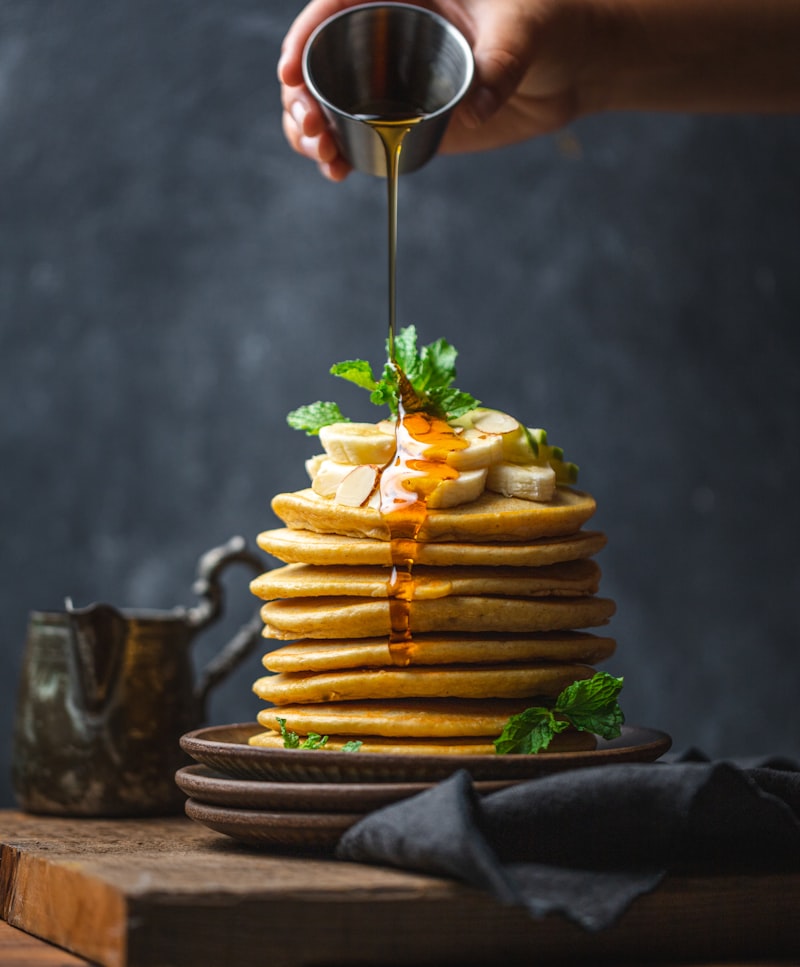
These pancakes are the ideal first recipe for new cooks. You will practice mixing, controlling pan temperature, and flipping — skills that transfer to eggs, fritters, and crepes.
Ingredients
- 1½ cups (225 g) self-raising flour
- 1 tablespoon caster sugar
- 1½ cups (375 ml) milk of choice
- 1 large egg
- 2 tablespoons melted butter, plus extra for cooking
- 1 teaspoon vanilla extract (optional)
- Pinch of salt
Instructions
- Whisk dry ingredients. In a large bowl, combine flour, sugar, and salt. Whisking aerates the flour and removes lumps without sifting.
- Mix wet ingredients separately. In a jug, whisk milk, egg, melted butter, and vanilla. Combining them first prevents over-mixing later.
- Combine gently. Pour wet into dry and stir until just combined. A few lumps are fine — over-mixing develops gluten and makes tough pancakes.
- Rest the batter. Let it sit for 10 minutes. This relaxes the gluten and lets the baking powder start working.
- Heat the pan. Place a non-stick pan over medium-low heat. Add a small pat of butter. The pan is ready when butter foams gently, not browns instantly.
- Cook in batches. Pour ¼ cup batter per pancake. Cook until bubbles form on the surface and edges look set, about 2 minutes.
- Flip once. Turn and cook for another 1–2 minutes until golden. Resist pressing down — it squeezes out air.
- Serve immediately. Stack and keep warm in a low oven while you finish the batch. Serve with butter, maple syrup, or fresh fruit.
What You Will Learn
This recipe teaches you to recognise the right pan temperature, understand the role of leavening, and avoid the most common pancake mistake: over-mixing. Once you can make these consistently, you are ready for fritters, pikelets, and crepes.
Common Mistakes
- Too hot: Outside burns before inside cooks. Lower the heat.
- Over-mixed batter: Produces dense, chewy pancakes. Stir until just combined.
- Flipping too early: Wait for bubbles and set edges, or the batter will spread and stick.